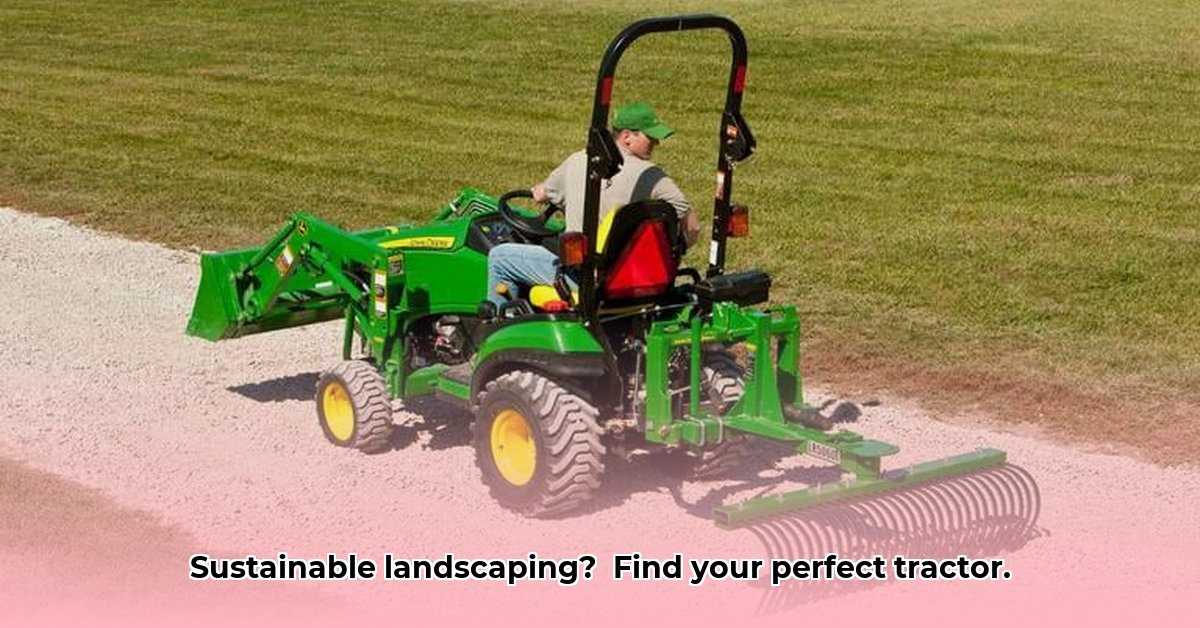
Sustainable landscaping practices are rapidly gaining traction, and compact tractors are emerging as essential tools for environmentally conscious professionals. These versatile machines offer a powerful blend of efficiency and eco-friendliness, making them ideal for a wide range of landscaping tasks. For more information on sub-compact tractors with backhoes, check out this helpful resource: Sub-compact tractors with backhoes. This guide will equip you with the knowledge to choose the best compact tractor and attachments for your specific needs, helping you optimize your operations for both profitability and environmental responsibility.
Assessing Your Landscaping Needs: A Tailored Approach
Before diving into specific brands and models, a thorough assessment of your landscaping operation is paramount. What size areas do you typically manage? What tasks are most frequent – mowing, tilling, snow removal, or other operations? How often do you need to utilize your equipment? Thinking ahead, how might your workload evolve in the next few years?
Consider these factors carefully. A small, sub-compact tractor may be perfect for a residential landscape, while a larger, more powerful model will be necessary for extensive commercial projects or varied terrain. Do you often need to navigate tight spaces or challenging landscapes? In such cases, maneuverability might be a primary concern. By carefully defining your needs, you lay the groundwork for a sound investment decision. A poorly matched tractor can significantly reduce productivity and increase your overall operating costs.
Comparing Compact Tractor Brands: A Detailed Look
The market offers several leading compact tractor brands, each with distinct features, strengths, and weaknesses. We will focus on four prominent players: John Deere, Kubota, Mahindra, and New Holland. While detailed comparative data across all aspects remains a work in progress, we can offer a valuable overview to guide your decision. Remember, specific model differences exist within each brand's lineup, and individual model specifications should therefore be carefully examined.
| Feature | John Deere | Kubota | Mahindra | New Holland |
|---|---|---|---|---|
| Fuel Efficiency | Generally Excellent | Very Good | Good | Good |
| Maintenance Cost | Moderate | Typically Low | Typically Low | Moderate |
| Lifespan (with proper care) | Long | Long | Long | Long |
| Environmental Impact (mfg) | Generally Good | Generally Good | Fair | Fair |
Note: Fuel efficiency figures, measured in gallons per acre, vary based on factors including tractor size, attachments used, and terrain conditions. Similarly, lifespan is significantly influenced by regular maintenance and operational practices.
Choosing the Right Attachments: Enhancing Versatility
The versatility of compact tractors is significantly amplified by the wide array of available attachments. These attachments function as specialized tools, expanding your tractor's capabilities and optimizing efficiency for various tasks. A rear blade levels and grades land; a box blade offers more precise grading; an aerator promotes lawn health; a tiller prepares soil; and a snowblower streamlines winter cleanup. Selecting the right attachments is crucial for maximizing productivity and efficiency. Prioritize attachments that align directly with your most frequently performed tasks – this will often yield the greatest return on your investment.
Operator Training and Safety: A Non-Negotiable Priority
Thorough operator training is not just recommended, it is essential for both safety and efficiency. Understanding the tractor’s controls, safety features, and potential hazards is critical to minimizing injury risk and maximizing the machine's lifespan. Proper training will dramatically improve your efficiency, leading to quicker completion of tasks, reduced fuel consumption, and less wear and tear on your equipment. Investing in training now will pay dividends in the long run.
Maintenance and Long-Term Sustainability: Protecting Your Investment
Regular maintenance is fundamental to ensuring the longevity and efficiency of your compact tractor. Just as regular maintenance on your vehicle extends its life, consistent servicing of your tractor will prevent costly repairs and keep it in optimal operating condition. This includes regular oil changes, inspections, and timely addressing of any minor issues. When the time comes to replace your tractor, research environmentally sound disposal options to minimize its environmental footprint.
Financial Considerations and Return on Investment (ROI): A Long-Term Perspective
A compact tractor is a substantial investment, but its long-term benefits are considerable. Carefully consider the total cost of ownership, encompassing the initial purchase price, leasing options, fuel expenses, maintenance costs, and potential resale value. Conduct a thorough cost-benefit analysis to determine the projected ROI. Will the increased efficiency enable you to take on more projects? Will the reduced environmental impact of your operations attract environmentally conscious clients? These considerations will significantly shape the financial viability of your investment.
Regulatory Compliance and Potential Incentives: Navigating Local Regulations
Familiarize yourself with local and regional regulations regarding emissions, noise levels, and other environmental considerations before purchasing a compact tractor. Many jurisdictions offer incentives, such as tax breaks or rebates, for environmentally sound equipment purchases. Thoroughly researching these incentives can substantially reduce the overall cost of your investment.
This comprehensive guide provides a robust framework for selecting the right compact tractor for your sustainable landscaping business. Remember, the landscape of sustainable equipment is constantly evolving, so stay informed and make choices that align with your long-term goals for both profitability and environmental responsibility.